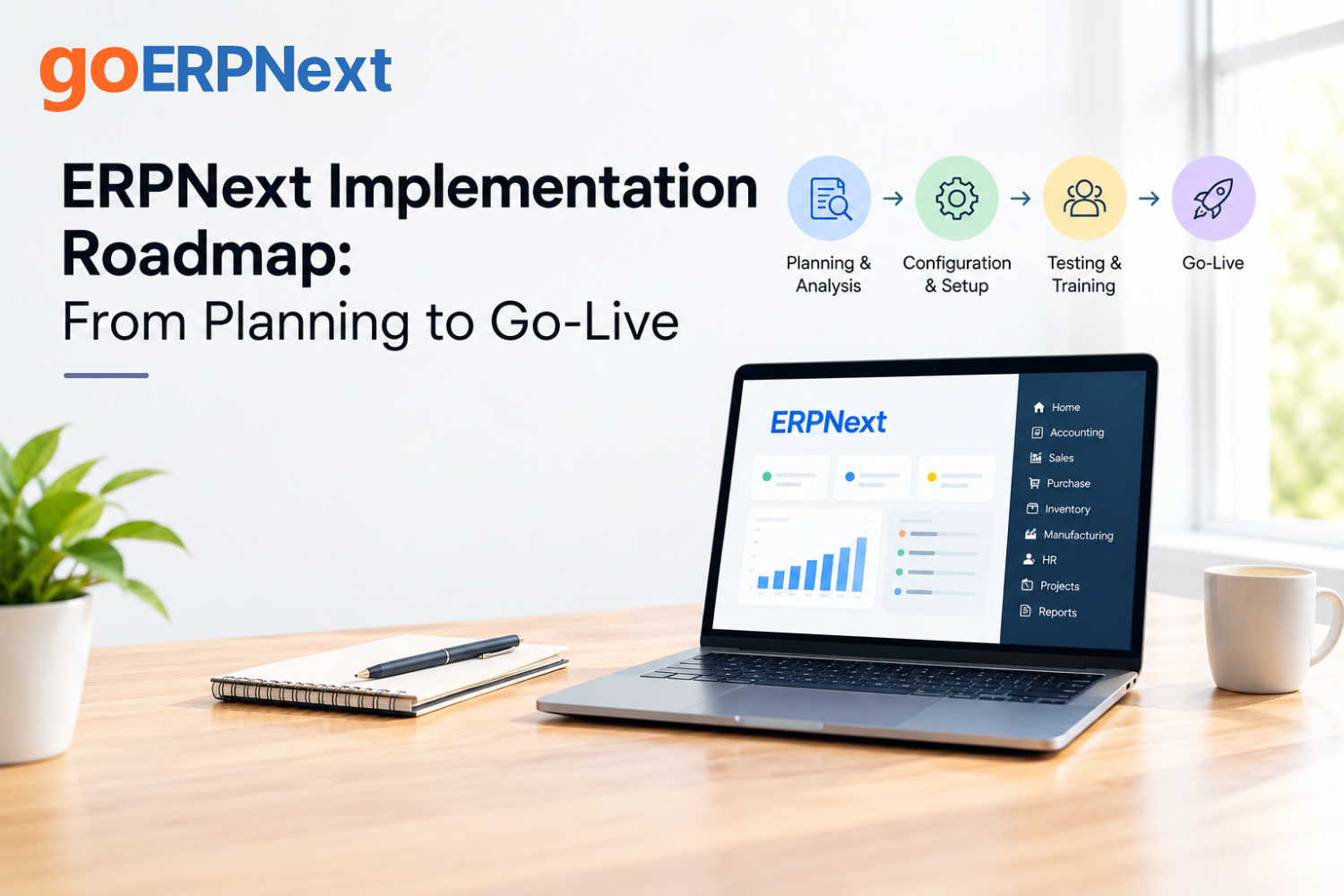
In the highly regulated and complex world of pharmaceutical manufacturing, wholesale, and distribution, embracing digital transformation is no longer optional. Modernizing operations with a robust Enterprise Resource Planning (ERP) system is crucial for maintaining compliance, optimizing supply chains, and achieving operational excellence. However, the path to a fully integrated system can seem daunting. This article presents a clear, step-by-step ERPNext Implementation Roadmap, guiding pharmaceutical businesses from the initial planning stages all the way to a successful go-live and beyond. Understanding this structured approach is vital for project managers, business owners, and IT leaders in the pharma sector looking to leverage ERPNext for enhanced visibility and control across their intricate operations.
The Imperative for a Structured ERPNext Implementation in Pharma
Pharmaceutical businesses operate under immense pressure, navigating stringent regulatory frameworks like GMP and Schedule M, managing perishable inventory with strict shelf-life requirements, and overseeing complex batch manufacturing processes. Legacy systems often struggle to keep pace, leading to data silos, manual errors, and delayed decision-making. Implementing a specialized ERP like ERPNext, designed with the flexibility to adapt to industry-specific needs, offers a strategic advantage. However, without a well-defined ERPNext Project Plan, even the most powerful system can fail to deliver its promised value. A structured approach minimizes risks, ensures stakeholder alignment, and maximizes the return on investment for critical areas such as batch traceability, quality control, and distribution network efficiency.
Phase 1: Strategic Project Planning & Discovery for ERPNext in Pharma
The foundation of any successful ERPNext deployment lies in meticulous planning. For pharmaceutical companies, this phase is particularly critical as it involves a deep dive into highly specialized processes.
Defining Project Scope and Objectives
This initial step involves clearly outlining what the ERPNext system will achieve. For a pharma company, objectives might include: automating batch record generation, implementing FEFO (First Expiry, First Out) inventory management for active pharmaceutical ingredients (APIs) and finished goods, streamlining contract manufacturing management, ensuring real-time compliance reporting for regulatory bodies, and improving demand forecasting across multiple depots. The scope must define which modules (e.g., Manufacturing, Inventory, Sales, Purchase, Quality, CRM, Accounting) will be implemented and what specific workflows (e.g., lead capture from medical representatives, sales order booking with batch allocation, payment scheduling tied to distributor credit terms) will be digitized.
Stakeholder Identification and Team Formation
A dedicated project team is essential. For a pharma implementation, this team should include representatives from key departments: Production (batch supervisors, quality assurance), Supply Chain (warehouse managers, procurement), Sales & Distribution (sales managers, C&F agents), Finance (accountants, costing specialists), IT, and senior management. Each role brings unique insights into existing pain points and future requirements. A strong project manager, often an ERP consultant with pharmaceutical domain knowledge, will lead the team and facilitate communication.
As-Is Process Analysis and To-Be Design
This critical step involves documenting current operational workflows (“as-is”) for processes like drug formulation, batch production, quality control checks, sales order fulfillment, and distribution logistics. Identifying bottlenecks, manual interventions, and compliance gaps is paramount. The “to-be” design then maps how ERPNext will optimize these processes. For instance, replacing manual batch record logs with digital batch creation, tracking manufacturing yield, and rejection tracking within ERPNext, or automating quotation and proforma invoice generation, ensuring adherence to MRP and price control compliance, and integrating scheme or discount management seamlessly.
Vendor Selection and Partnership
Choosing the right implementation partner is as important as selecting ERPNext itself. Look for partners like goerpnext (ERPNext Services) who possess deep expertise in pharmaceutical manufacturing, wholesale, and distribution. Their understanding of GMP and Schedule M compliance, batch costing, and complex supply chain requirements is invaluable. They can guide you through the intricacies of how to implement ERPNext successfully, ensuring that industry best practices are integrated into your deployment.
Phase 2: ERPNext System Setup, Configuration & Customization for Pharma
With a clear plan in place, this phase focuses on building the system to meet the pharmaceutical company’s specific needs. The initial ERPNext System Setup is foundational to supporting complex pharma operations.
Core System Setup and Module Configuration
This involves installing ERPNext and configuring essential modules. For pharma, this means setting up the Manufacturing module for multi-stage production processes, configuring the Inventory module for SKU and inventory management across product categories, dosage forms, strengths, pack sizes, and batch variants, and integrating the Quality module for in-process and final product quality checks. Accounting integration for real-time batch stock valuation and financial reporting is also key here.
Master Data Structure Design
Defining the structure for critical master data is paramount. This includes item master data (API, excipients, packing materials, finished goods with composition, strength, pack size, shelf life), batch numbers, supplier and customer master records (including drug licenses and regulatory classifications), and GL accounts. The design must accommodate specific fields required for regulatory compliance and efficient operational workflow improvements, such as batch attributes for potency or manufacturing date.
Customization and Development
While ERPNext is highly configurable, some pharmaceutical-specific processes might require customization. This could involve developing custom doctypes for specific regulatory documents, enhancing batch tracking to include unique quality parameters, or integrating with specialized lab equipment. Examples include custom workflows for product complaint handling and post-sales documentation, or specific reporting for pharma exporters and import-export traders. The customization should always be mindful of upgrade paths and maintainability.
Integrations with External Systems
Pharmaceutical businesses often rely on various external systems. This phase involves integrating ERPNext with these crucial tools. This could include CRM integration for unified customer engagement across depots and field sales channels, WhatsApp CRM integration for client notifications, order updates, and payment reminders, VOIP integration for call tracking and customer communication records, or integrating with specialized lab information management systems (LIMS) and machine data from production lines to ensure seamless data flow and GMP compliance.
Phase 3: Data Migration Strategy & Execution in ERPNext
Data migration is a delicate yet critical phase, especially in pharma where historical batch records, formulation data, and compliance documentation must be accurately transferred without loss or corruption.
Data Cleansing and Validation
Before migration, existing data from legacy systems must be thoroughly cleansed. This involves removing duplicates, correcting inaccuracies, and standardizing formats. For pharma, validating batch numbers, expiry dates, supplier certifications, and customer master data is non-negotiable. Dirty data can severely compromise the new ERP system’s integrity and regulatory compliance.
Migration Planning and Tools
A detailed plan outlining what data will be migrated (e.g., historical sales orders, open purchase orders, current inventory levels by batch, customer and supplier master, chart of accounts), the sequence of migration, and the tools to be used (e.g., ERPNext’s data import tool, custom scripts) is developed. Prioritizing critical master data and transactional data is essential to avoid business disruption.
Execution and Verification
The actual migration is executed, often in phases, starting with master data. Post-migration, rigorous verification is performed to ensure all data has been accurately transferred. This includes cross-checking financial balances, inventory counts, and open sales orders. For pharmaceutical companies, verifying batch records, product compositions, and shelf-life data is paramount to prevent operational errors and regulatory non-compliance.
Phase 4: User Acceptance Testing (UAT) & Training for ERPNext
This phase ensures that the ERPNext system meets user expectations and that employees are proficient in using it for their daily tasks within the pharma environment.
Developing UAT Scenarios for Pharma Operations
UAT involves real users testing the system against predefined business scenarios. For pharma, these scenarios are highly specific:
- Manufacturing: Creating a new item and batch, processing a production order from raw material consumption to finished goods receipt, tracking manufacturing yield, and documenting quality control checks at various stages.
- Inventory: Simulating FEFO-based picking for sales orders, conducting physical stock audits, managing multiple warehouses and depot inventory, and handling returns with batch traceability.
- Sales & Distribution: Capturing leads from pharma B2B portals, converting inquiries to sales orders, allocating batches, generating proforma invoices, and managing payment scheduling for distributors.
- Quality & Compliance: Testing the generation of batch production records (BPRs), quality control reports, and audit trails required for GMP and Schedule M compliance.
- Contract Manufacturing: Simulating a loan license job work order, tracking conversion costs, and managing inventory movement between units.
Users simulate their daily tasks, identify issues, and confirm that the system functions as expected and aligns with the “to-be” processes.
User Training and Documentation
Comprehensive training programs are crucial. Training should be role-specific, covering general ERPNext navigation as well as detailed workflows relevant to production personnel, QA/QC staff, sales teams, and finance departments. Creating user manuals and quick-reference guides tailored to pharma-specific ERPNext workflows (e.g., “How to create a new API batch,” “Processing a sales order with expiry date tracking”) will empower users and reduce post-go-live support requests. This also ensures that every team member understands how to leverage ERPNext implementation best practices from planning to go-live.
Phase 5: ERPNext Go-Live & Post-Implementation Support
The culmination of months of planning and effort, the go-live phase marks the official transition to the new ERPNext system.
Go-Live Strategy and Execution
A well-orchestrated go-live strategy minimizes disruption. This typically involves a cut-over plan, where legacy systems are phased out and ERPNext becomes the system of record. For pharma, this means ensuring that ongoing production batches, sales orders, and dispatches are seamlessly transitioned. It might involve a phased approach, perhaps starting with a single manufacturing unit or a specific product line, before a full rollout. Continuous monitoring of the system during the initial days and weeks is vital for stability.
Hypercare and Post-Implementation Support
The “hypercare” period immediately following go-live provides intensive support. A dedicated support team (internal and from the implementation partner) is available to quickly address any issues, answer user queries, and provide additional training as needed. For pharma, this means being extra vigilant about batch discrepancies, order fulfillment accuracy, and any compliance reporting issues. Post-hypercare, a long-term support agreement ensures the system continues to operate efficiently, with ongoing maintenance, updates, and optimization.
Continuous Improvement and Optimization
An ERPNext implementation is not a one-time project; it’s an ongoing journey of continuous improvement. Regular reviews, performance monitoring, and gathering user feedback are essential. Pharma companies can use this feedback to further refine workflows, explore additional ERPNext functionalities (e.g., advanced demand forecasting, quality incident management), or integrate new technologies (e.g., IoT for machine data, blockchain for supply chain traceability). This ongoing optimization ensures that the system evolves with the business and remains a valuable asset for years to come.
Key Roles and Responsibilities in an ERPNext Project for Pharmaceutical Businesses
A successful ERPNext project lifecycle guide for businesses, especially in pharma, relies on clearly defined roles:
- Executive Sponsor: Provides strategic direction, secures resources, and champions the project across the organization. For pharma, this person understands the strategic importance of compliance and efficiency.
- Project Manager: Oversees the entire project, manages timelines, budgets, and resources. They often bridge the gap between technical teams and business stakeholders, ensuring the ERPNext Project Plan stays on track.
- Functional Leads (Pharma): Departmental experts (e.g., Production Manager, Quality Head, Sales Director) who define requirements, participate in testing, and ensure the system aligns with their operational needs. They are critical for mapping specific pharma workflows.
- Technical Leads (IT/Consultant): Responsible for ERPNext system architecture, customization, data migration, and integrations. They ensure the system is technically sound and scalable.
- Key Users: End-users from various departments who provide feedback during UAT and become internal champions after go-live, helping colleagues adopt the new system.
- Implementation Partner (e.g., goerpnext): Provides expertise in ERPNext, industry-specific knowledge, technical resources, and project management support.
ERPNext Implementation Best Practices for Success in Pharma
To maximize the chances of a smooth and effective ERPNext deployment, consider these best practices:
- Strong Leadership & Communication: Visible executive support and transparent communication are vital for managing change and maintaining team morale throughout the ERPNext Implementation Roadmap.
- Focus on Business Processes First: Understand and optimize your pharma business processes before configuring the software. Don’t simply replicate inefficient legacy workflows.
- Phased Approach (if applicable): For large, complex pharmaceutical operations, a phased rollout can reduce risk and allow for iterative learning.
- Early and Continuous Training: Start user training early and make it an ongoing process. Empower users to embrace the new system.
- Data Quality Emphasis: Invest significant effort in data cleansing and validation. “Garbage in, garbage out” applies emphatically to ERP systems.
- Rigorous Testing: Comprehensive UAT, including negative testing and edge cases specific to pharma (e.g., expired batch handling), is crucial.
- Change Management: Actively manage organizational change. Address resistance, communicate benefits, and celebrate successes.
- Partner with Pharma ERP Specialists: A partner like goerpnext, with a deep understanding of pharmaceutical manufacturing, wholesale, and distribution, can anticipate challenges and provide tailored solutions.
Transforming Pharma Operations with a Strategic ERPNext Implementation
The journey from planning to go-live with ERPNext is a strategic investment for pharmaceutical businesses. By following a well-defined ERPNext Implementation Roadmap, companies can unlock unparalleled benefits:
- Enhanced Compliance: Automated batch tracking, digital quality control, and comprehensive audit trails ensure adherence to GMP, Schedule M, and other regulatory requirements, minimizing risks during inspections.
- Optimized Inventory Management: Real-time visibility into SKU and inventory management across multiple plants, depots, and warehouses enables FEFO-based picking, reduces wastage of perishable goods, and improves demand forecasting accuracy.
- Streamlined Manufacturing: From precise item and batch creation with detailed composition and yield tracking to contract manufacturing management and loan license job work allocation, production processes become more efficient and transparent.
- Improved Supply Chain Efficiency: Better lead capture and inquiry management, automated sales order booking with batch allocation, and integrated payment scheduling enhance customer satisfaction and distributor relationships. Real-time sales dashboards provide critical order pipeline tracking across locations.
- Reduced Operational Costs: By eliminating manual processes, reducing errors, and optimizing resource allocation, pharmaceutical companies can achieve significant cost savings in batch costing, inventory holding, and administrative tasks.
Implementing ERPNext successfully means transforming challenges into opportunities for growth, compliance, and competitive advantage in a demanding industry.
Frequently Asked Questions (FAQs)
How long does a typical ERPNext implementation take for a pharmaceutical company?
The duration of an ERPNext implementation for a pharmaceutical company varies significantly based on complexity, the number of users, scope of modules, and level of customization. Typically, it can range from 4 to 12 months, with larger, more complex multi-location deployments potentially taking longer. A thorough discovery phase and a detailed ERPNext Project Plan help in setting realistic timelines.
What are the biggest challenges during an ERPNext implementation in the pharma sector?
Key challenges include ensuring compliance with stringent regulatory requirements (GMP, Schedule M) within the system, migrating complex historical batch data accurately, managing change resistance from employees accustomed to legacy systems, and integrating with specialized lab equipment or existing CRM tools. Proper planning, robust UAT, and strong change management strategies are crucial to overcome these.
How can ERPNext help with GMP and Schedule M compliance for pharmaceutical manufacturers?
ERPNext can significantly aid compliance by providing features like comprehensive batch tracking and traceability, digital quality control workflows, audit trails for all transactions, version control for documents, and material and finished goods expiry date management. These functionalities help in maintaining accurate records and demonstrating adherence to regulatory standards.
What kind of post-implementation support should a pharmaceutical company expect for ERPNext?
Post-implementation support typically involves a hypercare period immediately after go-live for intensive issue resolution and user assistance. This is followed by ongoing support services that may include system maintenance, security updates, bug fixes, performance monitoring, and potential future enhancements or integrations. A reliable partner like goerpnext ensures long-term system stability and optimal performance.
Ready to Chart Your ERPNext Success Story in Pharma?
Navigating the complexities of an ERPNext implementation, particularly in the highly specialized pharmaceutical sector, demands expertise and a strategic approach. At goerpnext (ERPNext Services), we specialize in providing tailored ERPNext Implementation Roadmap solutions for pharmaceutical manufacturing, wholesale, and distribution businesses. Our deep industry knowledge ensures that your ERPNext system is not just implemented, but strategically aligned with your unique operational workflows and regulatory compliance needs. Let us help you transform your business with a robust, scalable, and compliant ERPNext solution.
Conclusion
The journey of an ERPNext implementation, from initial planning to successful go-live, is a transformative one for any pharmaceutical business. By understanding and meticulously following the outlined ERPNext Implementation Roadmap, companies can mitigate risks, ensure regulatory compliance, and build a foundation for sustained growth and operational excellence. The strategic decision to embrace a modern ERP system like ERPNext, coupled with a diligent implementation process, empowers pharma businesses to achieve real-time visibility, optimize complex processes like batch tracking and demand forecasting, and ultimately deliver life-saving products more efficiently and reliably. This comprehensive guide serves as your essential resource for how to implement ERPNext successfully, paving the way for a future-ready pharmaceutical enterprise.