Why ERPNext Implementation is a Journey, Not a Destination
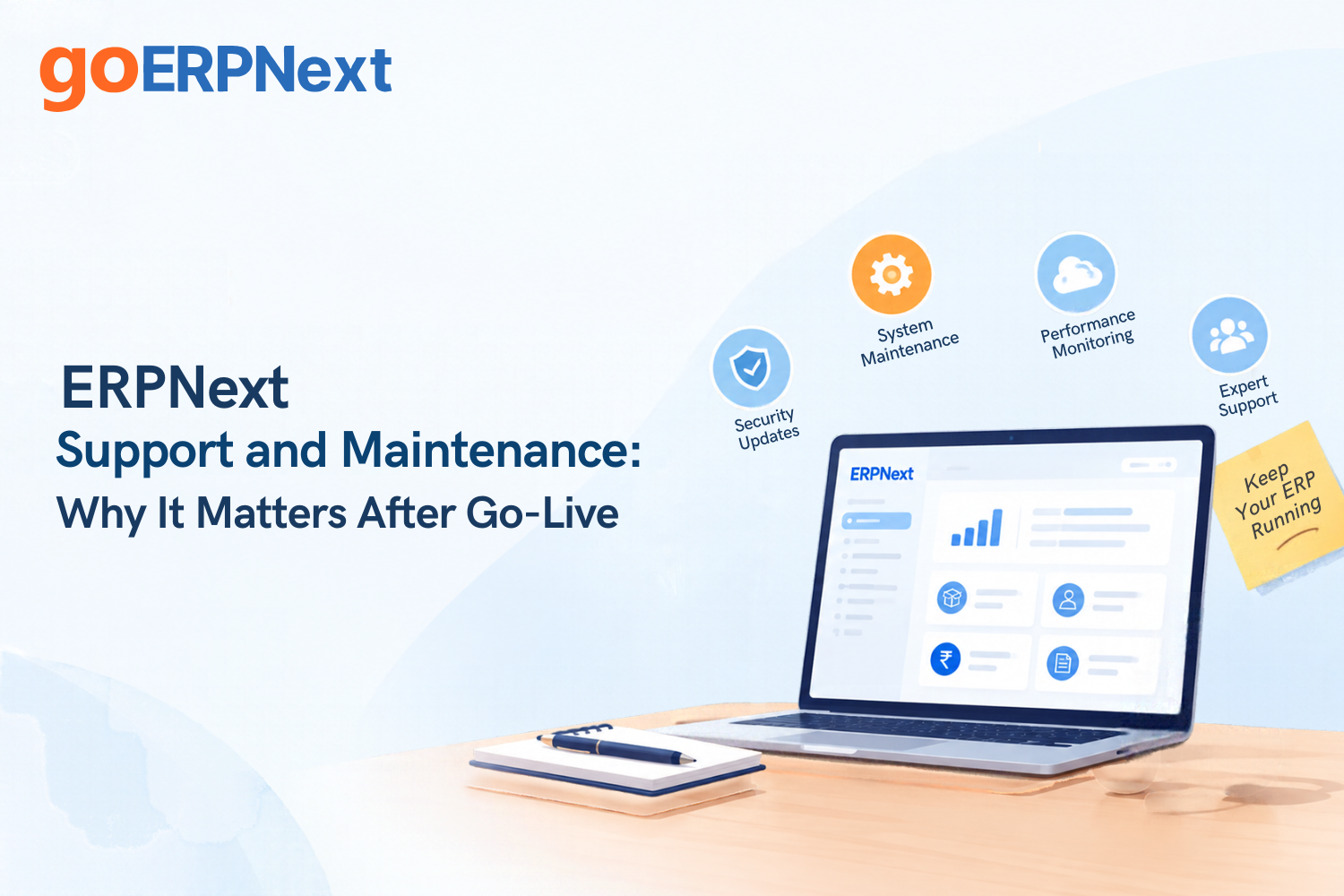
The pharmaceutical manufacturing industry is characterized by its high stakes, stringent regulatory requirements, and complex supply chain logistics. When a pharmaceutical formulation manufacturer or an API producer completes their initial ERP setup, there is often a sense of finality. However, the reality of enterprise software is that the go-live date is merely the beginning of the system’s lifecycle. Robust ERPNext support and maintenance is essential to ensure that the digital backbone of the company remains resilient, compliant, and efficient as production scales. For pharma businesses, a system failure or a data discrepancy isn’t just a technical glitch; it can lead to batch rejections, regulatory fines, or supply chain bottlenecks that impact patient safety.
Post-implementation, the business environment continues to evolve. New drug price control orders might be issued, Schedule M compliance requirements might shift, or a contract manufacturing organization (CMO) might need to integrate new loan license job work workflows. Without ongoing ERPNext post-go-live support, the system can become stagnant, failing to adapt to these critical changes. Maintenance ensures that the software evolves alongside the business, capturing lead data from pharma B2B portals and managing complex SKU variants across different dosage forms and pack sizes without performance degradation. The importance of ERPNext maintenance after implementation cannot be overstated, as it protects the significant investment made during the initial ERPNext implementation phase.
A well-maintained system allows IT managers and ERP administrators to shift their focus from firefighting to optimization. In the pharmaceutical sector, where batch costing and real-time inventory visibility across multiple depots are vital, the underlying database and framework must be kept in peak condition. Utilizing comprehensive ERPNext implementation playbooks helps teams understand that the transition from a project environment to a steady-state operational environment requires a shift in mindset—from rapid development to disciplined stability and incremental improvement.
The 5 Pillars of ERPNext Post-Go-Live Maintenance
For a pharmaceutical wholesaler or a medical device manufacturer, maintenance is not a monolithic task but a multi-layered strategy. To manage a complex environment effectively, businesses must focus on five core pillars that ensure long-term system health.
1. Technical Stability and Performance Tuning
As a pharma company grows, the volume of data generated by batch records, quality inspection reports, and sales invoices increases exponentially. This necessitates ERPNext performance tuning after go-live. High-volume environments, especially those with extensive pharma inventory management software requirements, can experience latency in stock ledger queries or accounting reports. Regular maintenance involves optimizing MariaDB indexes and managing Redis caches to ensure that real-time sales dashboards and order pipeline tracking remain responsive even during peak month-end closing periods.
2. Security and Compliance Continuity
Pharmaceutical data is highly sensitive, involving proprietary formulations and clinical data. Adhering to ERPNext Security Best Practices is a continuous process. Maintenance includes regular security patches, managing user permissions as staff roles change, and ensuring that audit trails remain intact for GMP compliance. For exporters and import-export traders, ensuring that documentation and electronic signatures are secure and immutable is a non-negotiable aspect of system upkeep.
3. Data Integrity and Validation
In pharma manufacturing, data integrity is the cornerstone of regulatory approval. Post-go-live maintenance includes periodic data audits to ensure that batch variants, shelf life calculations, and manufacturing yields are being recorded accurately. If a discrepancy is found, troubleshooting procedures must be followed to identify whether the issue stems from user error or a system configuration mismatch. Maintaining clean data is essential for accurate demand forecasting and inventory visibility across multiple plants.
4. Functional Evolution and Customization Care
Business processes in a CDMO or a nutraceutical brand are rarely static. There might be a need for new payment scheduling automation to handle complex distributor credit terms or the introduction of a new customer portal solutions for better client engagement. Maintenance ensures that these new functional requirements are integrated without breaking existing pharma lead management workflows or FEFO-based picking logic.
5. User Training and Adoption
The human element is often the weakest link in ERP success. Ongoing support involves training new employees on pharma item and batch creation, explaining the nuances of milestone-based billing for institutional supply orders, and ensuring that medical representatives are using the CRM features correctly. Managed support desks help address user queries promptly, preventing “workarounds” that bypass the ERP and create data silos.
Handling ERPNext System Updates Without Breaking Customizations
One of the most significant challenges for an ERP administrator in the pharma industry is managing ERPNext system updates. The Frappe framework is updated frequently, bringing new features and security fixes. However, for a manufacturer with deep customizations—such as specific logic for conversion cost tracking or automated quotation generation for export markets—an update can be daunting. The risk of “breaking” a critical manufacturing workflow is real.
To mitigate this, best practices for ERPNext version upgrades dictate a strict staging-to-production workflow. Before any update is applied to the live environment, it must be tested on a mirror image of the production site. This allows the team to verify that the core functionality, such as batch allocation and real-time batch stock valuation, remains unaffected. Following the ERPNext Official Documentation regarding versioning and breaking changes is critical during this phase. If the pharma company utilizes ERPNext implementation services from a specialized partner, the partner should handle the technical migration, ensuring that custom scripts for Schedule M compliance or WhatsApp CRM integrations are compatible with the latest version.
Updating isn’t just about the application layer; it also involves the underlying stack. Keeping the server OS and Python environment updated ensures that the system benefits from the latest performance improvements and security hardening. For businesses managing hundreds of SKUs and pack sizes, these incremental technical improvements can lead to noticeable speed gains in everyday tasks like sales order booking and proforma invoice generation.
Server-Level Maintenance: Bench, Redis, and MariaDB Tasks
Behind the user-friendly interface of ERPNext lies a robust server architecture that requires dedicated attention. Frappe bench maintenance is the primary method for managing the backend. This includes tasks like clearing old logs, running database migrations, and managing background jobs. In a pharmaceutical setting, background jobs often handle heavy tasks like calculating manufacturing yields across multiple batches or generating complex financial reports. If the background workers are stalled, the entire business operation can feel the impact.
MariaDB maintenance is equally vital. For a pharma wholesaler with thousands of transactions daily, the database size can grow rapidly. Periodic optimization of tables and checking for slow queries helps maintain system agility. Similarly, Redis management is crucial for session handling and caching. If Redis is not properly configured, users might experience sudden logouts or delayed updates in their real-time sales dashboards. IT managers should be familiar with Frappe Bench Maintenance Commands to perform routine health checks and ensure that the server resources—CPU, RAM, and Disk I/O—are not being bottlenecked by unoptimized processes.
Furthermore, server-level maintenance involves robust backup strategies. For a pharma company, losing data related to batch composition or quality rejection tracking could be catastrophic. Maintenance schedules must include daily off-site backups and periodic “restore tests” to ensure that the data can be recovered in the event of a hardware failure or a cyber-attack. This level of technical diligence is what separates a stable ERPNext managed services offering from a reactive, break-fix approach.
Building a Sustainable Internal or Managed Support Desk
How a company decides how to manage ERPNext support tickets can define the long-term success of the software. Large pharmaceutical enterprises might have the resources to build an internal center of excellence, while smaller Ayurvedic or herbal medicine manufacturers might prefer ERPNext managed services. Regardless of the model, the goal is to provide a structured way for users to report issues and request enhancements.
A sustainable support desk should prioritize tickets based on business impact. For example, an issue preventing the printing of a GMP-compliant COA (Certificate of Analysis) should be a “Priority 1” ticket, whereas a request for a new cosmetic change on a customer portal should be lower on the list. Integrating the support desk with the ERP itself allows for better tracking and transparency. When a distributor reports an issue with their payment allocation, the support team should have immediate access to the relevant transaction records to resolve the matter quickly.
Comparison of In-House vs. Managed ERPNext Maintenance
Choosing the right maintenance model is crucial for pharmaceutical companies. The following table compares the two primary approaches to help IT managers make an informed decision.
| Feature | In-House Maintenance Team | Managed Services Provider |
|---|---|---|
| Technical Expertise | General knowledge of the local environment. | Deep expertise across multiple Frappe/ERPNext versions. |
| Response Time | Immediate availability but limited by staff hours. | SLA-driven responses, often with 24/7 coverage. |
| Cost Structure | High fixed costs (salaries, benefits, training). | Predictable monthly or annual subscription fees. |
| Regulatory Knowledge | Depends on individual staff experience. | Usually experienced with pharma-specific compliance (GMP/Schedule M). |
| Scalability | Difficult to scale quickly during peak periods. | Easily scales up or down based on business needs. |
| Focus | Often distracted by general IT issues (printers, networks). | Dedicated focus on ERP performance and optimization. |
Operational Workflow Improvements Through Continuous Maintenance
Maintenance is not just about keeping the lights on; it is about refining workflows to achieve higher efficiency. In the pharma world, small improvements in the ERP can lead to significant time savings on the shop floor or in the warehouse. For instance, continuous maintenance of the pharma inventory management software modules allows for the fine-tuning of FEFO (First-Expired, First-Out) logic. By ensuring the system correctly tracks shelf life across various batch variants, a company can drastically reduce product expiry waste.
Another area of improvement is pharma lead management. As marketing teams participate in more B2B portals and trade shows, the volume of inquiries grows. Maintenance of the CRM integration ensures that lead routing rules are optimized, so that inquiries for API sales are directed to the correct regional manager without delay. Similarly, payment scheduling automation can be refined over time to reflect changing relationships with distributors, allowing for more flexible credit terms while maintaining strict control over accounts receivable.
For contract manufacturers, maintenance might involve updating the job work allocation logic to better track conversion costs. As electricity or labor costs fluctuate, the system’s batch costing models must be adjusted. Regular maintenance check-ins provide an opportunity to review these business rules and ensure they still reflect the economic reality of the business. This ensures that every institutional supply order or retail pharmacy chain contract remains profitable.
Real-World Business Value: The Impact of Downtime in Pharma
The business value of ERPNext support and maintenance becomes most apparent when considering the cost of failure. In pharmaceutical manufacturing, a system outage can halt the production of life-saving medicines. If the ERP is down, the quality team cannot release batches, the warehouse cannot ship orders, and the accounts team cannot generate invoices. This leads to missed delivery deadlines and potential penalties from large hospital pharmacies or government buyers.
Furthermore, poor maintenance can lead to data records that appear correct but are actually mismatched in the database. For an API manufacturer, this could mean the system shows 100kg of a raw material available, but the physical stock is zero because a background inventory reconciliation task failed. Such discrepancies disrupt production planning and lead to emergency procurement at higher costs. Reliable ERPNext post-go-live support prevents these scenarios through proactive monitoring and regular health checks, ensuring that the system provides a “single version of truth” for the entire organization.
Finally, there is the value of peace of mind. Business owners and IT managers can focus on strategic growth expanding into new markets or launching new product lines—knowing that their core operational system is stable. They know that if they need to integrate a new customer portal solution or implement a complex payment scheduling automation, they have the technical support structure in place to do so without risking their existing operations.
Why PHARMA for Your Post-Go-Live Journey
SigzenPHARMA understands that the pharmaceutical industry operates in a unique environment where precision and compliance are paramount. Our approach to ERPNext support and maintenance is built on years of experience working with formulation manufacturers, API producers, and large-scale distributors. We don’t just fix bugs; we act as a strategic partner to ensure your ERP environment evolves with the industry’s demands.
Our team specializes in ERPNext implementation services that extend far beyond the initial go-live. We provide deep technical expertise in Frappe bench maintenance and database optimization, ensuring that your system remains fast and reliable as your data grows. We also understand the intricacies of pharma operations, from managing loan license job work to ensuring GMP-compliant documentation for export traders. With SigzenPHARMA, you get more than just a support desk; you get a team dedicated to your long-term operational success.
We pride ourselves on our proactive maintenance models. Instead of waiting for a problem to occur, we perform regular system audits, security checks, and performance tuning. Whether you are a retail pharmacy chain looking to optimize inventory or a biotech firm needing complex batch costing, our managed services provide the stability and scalability you need to thrive in a competitive market.
Frequently Asked Questions
How often should we perform ERPNext system updates in a pharma environment?
While the Frappe framework releases updates frequently, pharma companies should adopt a controlled update cycle. Major updates are typically performed quarterly or bi-annually, following extensive testing in a staging environment to ensure no disruptions to GMP compliance or custom manufacturing workflows.
What is included in ERPNext managed services for pharmaceutical companies?
Managed services typically include server monitoring, routine backups, security patching, Frappe bench maintenance, user support, and bug fixes. For pharma, it often also includes assistance with regulatory audit trails and periodic data validation checks.
Can we manage ERPNext maintenance ourselves without an external partner?
Yes, provided you have a dedicated IT team with expertise in Python, MariaDB, and the Frappe framework. However, many pharma companies find that an external partner like SigzenPHARMA provides better value by offering specialized industry knowledge and reducing the burden on internal staff.
How does maintenance affect our custom reports and print formats?
Routine maintenance shouldn’t affect customizations. version. This is why a staging server and a disciplined testing process are essential.
What are the risks of ignoring ERPNext performance tuning after go-live?
Ignoring performance tuning can lead to slow system responses, timeout errors during heavy reporting, and a general decline in user productivity. In a high-volume pharma warehouse, even a few seconds of delay per transaction can significantly slow down the entire shipping process.
Conclusion
Success in the pharmaceutical industry requires more than just a good product; it requires operational excellence supported by a reliable technology stack. ERPNext support and maintenance is the engine that keeps your business moving forward after the initial excitement of go-live has faded. By focusing on technical stability, security, and continuous improvement, pharma manufacturers and distributors can ensure that their ERP remains a powerful tool for growth and compliance.
Whether it is through Frappe bench maintenance to keep the server running smoothly or ERPNext managed services to handle user support, investing in maintenance is an investment in the future of your company. In an industry where every batch counts and every second matters, having a well-maintained ERP system is not just a best practice—it is a competitive necessity. As you navigate the complexities of pharma manufacturing and global distribution, remember that the journey doesn’t end at go-live; it is just beginning, and the right support makes all the difference.
Ensure Your Pharma Operations Never Skip a Beat
Don’t let technical debt or system lag hinder your pharmaceutical growth. From API manufacturing to retail pharmacy distribution, SigzenPHARMA provides specialized ERPNext support and maintenance tailored to your specific regulatory and operational needs. Our experts ensure your system stays fast, secure, and fully compliant.
Contact Sigzen Technologies today to discuss a managed services plan that secures your investment and empowers your team.