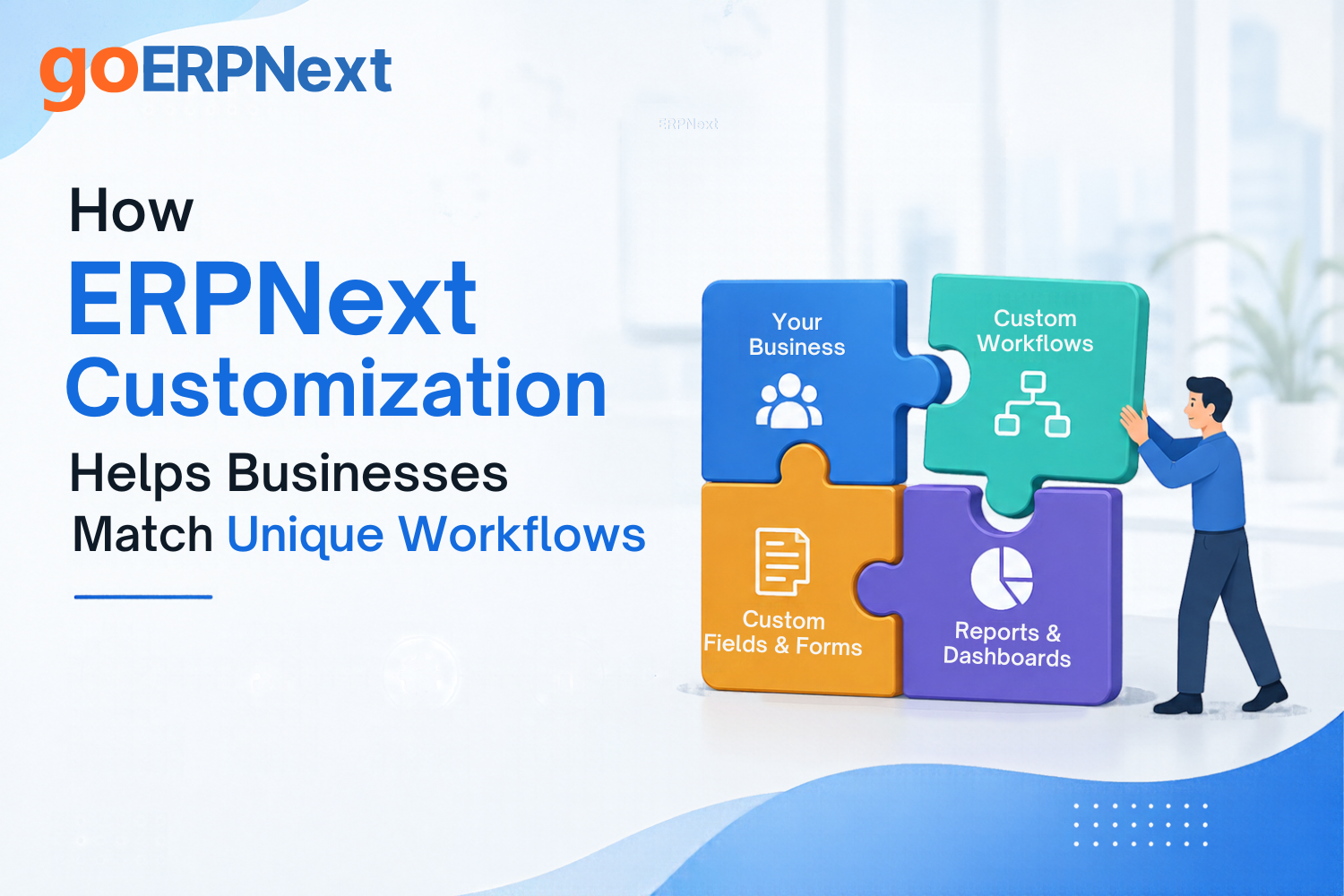
The pharmaceutical industry operates within a labyrinth of highly specific regulations, intricate production processes, and a complex supply chain. Generic enterprise resource planning (ERP) systems, while robust, often struggle to perfectly align with these unique demands, leading to operational bottlenecks and compliance gaps. This is precisely where the strategic power of ERPNext Customization Unique Workflows comes into play, enabling pharmaceutical businesses to mold their ERP solution to fit their exact operational blueprint rather than bending their operations to fit the software.
The Pharmaceutical Predicament: Why Standard ERPNext Isn’t Always Enough
Pharmaceutical manufacturing, wholesale, and distribution aren’t just any businesses; they are sectors where precision, traceability, and strict adherence to regulatory standards like GMP (Good Manufacturing Practices) and Schedule M compliance are non-negotiable. Standard ERPNext provides a powerful foundation with its comprehensive modules for accounting, inventory, sales, and manufacturing. However, the nuances of a pharma operation — from batch-specific potency tracking and multiple quality checks at each stage to complex contract manufacturing scenarios and highly specific sales incentive structures — often extend beyond the out-of-the-box functionalities.
Consider a pharmaceutical formulation manufacturer needing to track not just expiry dates, but also specific retest dates for raw materials, intermediate products, and finished goods, or an API manufacturer requiring intricate yield calculations that account for various chemical reactions and purity levels. A standard system might offer basic batch management, but it rarely accounts for these deep-seated industry-specific requirements without thoughtful adaptation. This gap necessitates the ability to tailor ERPNext to Business Processes, ensuring that the system truly serves the business rather than creating new complexities.
Identifying Your Pharmaceutical Business’s Unique Workflows for ERPNext Adaptation
Before diving into customization, a thorough understanding of your existing workflows is paramount. This involves a detailed audit of every operational process, from the initial lead capture and inquiry management from pharma B2B portals, medical representatives, distributor networks, and institutional buyers, to the final product delivery and post-sales documentation. Key areas to scrutinize include:
- Lead-to-Order Process: How are customer inquiries routed and allocated to sales teams or regional managers? What are the specific approval flows for quotations and proforma invoices?
- Manufacturing & Quality Control: What are your exact batch creation processes, including composition, strength, pack size, shelf life, manufacturing yield, and rejection tracking? How do quality checks integrate at each stage, and what are the specific release/rejection workflows?
- Inventory & Logistics: Beyond basic SKU and inventory management, how do you handle temperature-controlled storage, FEFO-based picking for sales order booking and batch allocation, and inter-plant transfers with specific documentation?
- Sales & Distribution: What are your unique payment scheduling tied to distributor credit terms and advance payment collection? How do you manage scheme or discount management specific to pharma distribution?
- Regulatory Compliance: What specific data points, reports, and audit trails are required for GMP, Schedule M compliance, export documentation, and regulatory audits?
This comprehensive analysis forms the blueprint for how to customize ERPNext for specific operations, ensuring that every modification adds tangible value and addresses a real business need.
ERPNext Customization: The Foundation for Tailoring Pharma Processes
ERPNext’s open-source nature, built on the flexible Frappe Framework, is its greatest strength when it comes to meeting unique business needs. Unlike rigid proprietary systems, ERPNext is designed from the ground up to be extended and adapted. This inherent flexibility allows pharmaceutical companies to achieve sophisticated ERPNext workflow automation without having to build a system from scratch. The framework provides a rich set of tools that empower businesses to modify standard behaviors, introduce new functionalities, and integrate seamlessly with existing systems.
This capability is crucial for organizations that need to Match Business Needs with ERPNext, especially when those needs involve highly specialized processes unique to pharmaceutical manufacturing and distribution. From adapting user interfaces to creating complex backend logic, ERPNext’s architecture supports a wide spectrum of customization, making it an ideal choice for an industry that demands precision and adaptability.
Key ERPNext Customization Tools for Workflow Alignment: A Deep Dive
ERPNext offers a robust toolkit for tailoring its functionality to the intricate demands of the pharmaceutical sector. Understanding these tools is the first step toward successful ERPNext implementation for unique business logic.
Beyond Standard: Leveraging Custom Fields, DocTypes, and Print Formats
- Custom Fields: The fundamental building block for extending data capture. In pharma, this means adding fields for batch potency, retest dates, drug license numbers, specific storage conditions, or regulatory approval IDs directly to relevant DocTypes like ‘Item’, ‘Batch’, ‘Purchase Order’, or ‘Sales Order’. This ensures that all critical data points, often overlooked in generic systems, are meticulously tracked. You can learn more about extending data fields through Custom Fields in the Frappe Framework documentation.
- Custom DocTypes: When existing DocTypes don’t suffice, new ones can be created to manage entirely new entities or processes. For instance, a pharmaceutical company might create a custom DocType for “Stability Study Protocol” to manage specific testing parameters and schedules for new formulations, or “Batch Deviation Report” to document and track non-conformances with detailed root cause analysis and corrective actions.
- Custom Print Formats: Pharmaceutical operations require highly specific documents – Certificates of Analysis (CoA), batch manufacturing records, dispensing logs, export documentation, and regulatory submission forms. Custom print formats allow you to design these documents precisely, pulling data from standard and custom fields, ensuring all required information and branding elements are present. This is vital for maintaining compliance and professional representation.
Advanced Customization: Using Custom Scripts and Server Events for Complex Logic
- Workflows: ERPNext’s Workflows feature is indispensable for defining and enforcing sequential processes and approval chains. For a pharma company, this could mean defining a rigorous multi-stage batch release workflow involving production, quality control, and final quality assurance approvals. Similarly, sales order processing might have a workflow for credit limit checks and management approvals for high-value orders or non-standard payment terms. The ERPNext documentation on Workflows provides a detailed guide on setting these up.
- Custom Scripts (Client-side): These JavaScript snippets run in the user’s browser, allowing for dynamic behavior and validation on forms. Pharma examples include:
- Automatically calculating expiry dates based on manufacturing date and shelf life (e.g., if manufacturing date is entered, expiry date field auto-populates).
- Enforcing specific formatting for batch numbers or drug license IDs.
- Displaying warnings if a user tries to allocate a batch that is nearing expiry or has a ‘Quarantine’ status.
- Customizing the user interface for specific roles, simplifying data entry for a QC chemist or a dispatch manager. The Frappe Framework documentation on Custom Scripts offers comprehensive guidance.
- Server Events (Server-side Logic): For more complex business logic, data validations, and integrations that require backend processing, Server Events (via Python scripts) are essential. This is where the true power of ERPNext implementation for unique business logic comes alive. Examples for pharma include:
- Implementing complex batch costing, MRP and price control compliance, and scheme or discount management rules based on customer type or order volume.
- Automating the creation of quality inspection plans upon batch receipt or production completion.
- Triggering notifications to regulatory affairs teams when certain batch-related events occur.
- Integrating with external lab systems for automated upload of QC results, streamlining the quality approval process.
- Implementing advanced demand forecasting and inventory visibility across multiple plants, depots, and warehouses.
By judiciously combining these tools, businesses can truly Match Business Needs with ERPNext, transforming it into a highly specialized system tailored for the pharmaceutical ecosystem.
Step-by-Step: Implementing Custom Workflows and Automation in ERPNext for Pharma
A structured approach is critical for successful ERPNext customization. Here’s a typical roadmap:
- Discovery & Requirements Gathering: Collaborate with stakeholders (production, QC, sales, regulatory) to meticulously map out existing processes and identify pain points. Define clear, measurable objectives for each customization. For instance, how should specific pharma lead management from different channels be handled?
- Design & Prototyping: Based on requirements, design the new workflows using ERPNext’s tools. Create mock-ups or prototypes for custom DocTypes, fields, and print formats. This iterative process allows for feedback and refinement.
- Development & Configuration: Implement the customizations using the tools discussed above – creating custom fields, setting up workflows, writing custom scripts, and configuring server events. This phase requires skilled ERPNext implementation services.
- Testing & Validation: Rigorous testing is crucial, especially in pharma. Conduct unit testing, integration testing, and user acceptance testing (UAT) to ensure that the customized system functions as expected, meets regulatory requirements, and delivers the desired operational improvements. This includes testing scenarios like batch allocation, FEFO-based picking, and order cancellation workflows.
- Training & Deployment: Train end-users on the new workflows and functionalities. A smooth transition is essential for user adoption. Deploy the customizations to the live environment.
- Monitoring & Iteration: Post-deployment, continuously monitor performance, gather user feedback, and be prepared to iterate and refine the customizations as business needs evolve.
Comparison: Standard vs. Customized Pharma Workflow
To illustrate the impact, consider a common scenario:
| Aspect | Standard ERPNext Workflow | Customized ERPNext Workflow for Pharma |
| Batch Release | Basic approval for stock movement. | Multi-stage approval (Production Head, QC Analyst, QA Manager) based on custom ‘Batch Status’ (Quarantine, Approved, Rejected). Automatic generation of CoA. |
| Raw Material Receiving | Simple receipt and stock update. | Automatic creation of Quality Inspection Plan (QIP) upon receipt. Custom fields for ‘Supplier CoA Reference’, ‘Retest Date’. Material status defaults to ‘Quarantine’. |
| Sales Order Processing | Order booking, stock allocation. | Automated credit limit check, approval workflow for orders exceeding limits or with custom payment terms. FEFO-based batch allocation enforcement. |
| Contract Manufacturing | May track as regular production order. | Custom DocType for ‘Job Work Order’. Automated tracking of conversion cost, raw material consumption against client-provided materials. Milestone-based billing for contract manufacturing and institutional supply orders. |
| Regulatory Reporting | Manual data extraction and compilation. | Automated generation of specific reports (e.g., annual product review data, batch audit trails) for GMP and Schedule M compliance, directly from ERPNext. |
Operational Workflow Improvements Through ERPNext Customization
The strategic application of customization tools directly translates into tangible improvements across various pharmaceutical operations:
- Streamlined Manufacturing: Implement batch-specific production processes that adhere to strict recipes and quality gates. Real-time tracking of raw material consumption, manufacturing yield, and rejection tracking becomes granular, improving efficiency and reducing waste.
- Enhanced Quality Control: Automate the creation of quality inspection plans, integrate with lab equipment for faster data entry, and establish multi-level approval workflows for batch release. This is critical for GMP and Schedule M compliance.
- Optimized Inventory Management: Move beyond basic stock tracking with advanced FEFO-based picking rules, multi-location pharma inventory management software, and precise expiry date management. This minimizes spoilage, ensures product integrity, and prevents costly recalls.
- Efficient Sales & Distribution: Automate quotation and proforma invoice generation with complex pricing rules, manage payment scheduling automation tied to distributor credit terms, and provide customer portal access for order tracking, document downloads, and complaint status. This enhances customer experience and reduces administrative burden.
- Robust Regulatory Compliance: Develop custom audit trails for every critical action, generate specific reports required by regulatory bodies, and embed compliance checks directly into workflows. This ensures that the system actively supports, rather than hinders, regulatory adherence.
- Unified Customer Engagement: Integrate CRM for unified customer engagement across depots and field sales channels. WhatsApp CRM integration for client notifications, order updates, and payment reminders, and VOIP integration for call tracking and customer communication records, create a comprehensive customer interaction history.
Benefits of ERPNext Customization for Complex Pharma Processes
The Benefits of ERPNext customization for complex processes extend far beyond mere operational efficiency:
- Enhanced Compliance & Audit Readiness: By mirroring regulatory requirements directly within workflows and data structures, businesses achieve superior traceability and audit readiness for GMP and Schedule M compliance.
- Improved Data Accuracy & Integrity: Custom validations and automated processes reduce manual errors, ensuring that critical data like batch details, expiry dates, and quality parameters are always precise.
- Increased Operational Efficiency: Automation of repetitive tasks, streamlined approval processes, and elimination of manual workarounds lead to significant time and cost savings.
- Better Decision-Making: Real-time sales dashboards and order pipeline tracking across locations, combined with accurate batch costing and inventory visibility, empower management with data-driven insights.
- Scalability & Adaptability: A customized ERPNext system can evolve with the business, adapting to new product lines, regulatory changes, or market expansion without requiring a complete system overhaul.
- Competitive Advantage: Businesses that can respond faster to market demands, maintain impeccable quality standards, and offer superior customer service gain a significant edge.
Best Practices for Sustainable and Scalable ERPNext Customizations
While powerful, customization must be handled with care to ensure long-term sustainability and ease of upgrades. Engaging expert ERPNext implementation services is crucial here.
- Modular Approach: Design customizations to be modular and independent where possible. This minimizes impact on other parts of the system and simplifies maintenance.
- Documentation is Key: Thoroughly document every customization, including its purpose, logic, and dependencies. This is vital for future upgrades, troubleshooting, and onboarding new team members.
- Testing Regorously: Never skip comprehensive testing. Ensure that customizations don’t introduce unintended side effects and that they function correctly across various scenarios.
- Prioritize Core Logic: Focus customizations on critical business logic and unique workflows. Avoid over-customizing elements that are adequately covered by standard ERPNext features.
- Plan for Upgrades: Design customizations with ERPNext’s upgrade path in mind. Utilize standard hooks and extension points provided by the Frappe Framework to minimize conflicts during version updates.
- Consult with Experts: Leverage the knowledge of experienced ERPNext consultants. Their expertise in best practices and understanding of the Frappe Framework can prevent common pitfalls and ensure optimal solutions.
Measuring the ROI of Tailored ERPNext Workflows
Demonstrating the return on investment (ROI) for ERPNext customization unique workflows is essential for justifying the effort and resources. Quantifiable metrics include:
- Reduction in Manual Errors: Fewer data entry mistakes, batch mix-ups, or compliance violations directly translate to cost savings and improved quality.
- Faster Cycle Times: Expedited order processing, quicker batch release, and reduced time-to-market for new products.
- Improved Resource Utilization: Automation frees up staff from repetitive tasks, allowing them to focus on more strategic activities.
- Enhanced Compliance & Reduced Risk: Avoidance of regulatory penalties, product recalls, and reputational damage due to non-compliance.
- Cost Savings: Lower operational costs due to optimized inventory, reduced waste, and efficient production planning.
- Better Customer Satisfaction: Faster order fulfillment, accurate invoicing, and responsive customer support through tools like customer portal solutions.
Troubleshooting Common Challenges in ERPNext Workflow Customization
Even with best practices, challenges can arise. Addressing them proactively is key:
- Scope Creep: Uncontrolled expansion of customization requests. Combat this with clear, documented requirements and strict change management processes.
- Technical Complexity: Some unique business logic might require advanced coding. This is where relying on seasoned ERPNext implementation services is invaluable.
- User Adoption: Resistance to change. Mitigate this through early user involvement in the design phase, comprehensive training, and clear communication of benefits.
- Upgrade Compatibility: Customizations can sometimes conflict with new ERPNext versions. Adhering to best practices for modularity and utilizing the Frappe Framework’s extension points helps minimize this. Regular testing after upgrades is non-negotiable.
- Data Migration Issues: Ensuring existing pharma item and batch creation data, historical sales orders, and payment records are accurately migrated into a customized system can be complex.
Case Studies: Businesses That Excel with Custom ERPNext Workflows
Consider a medium-sized pharmaceutical wholesaler struggling with manual batch allocation and expiry date management. By implementing ERPNext customization, they integrated a custom FEFO (First Expired, First Out) picking logic directly into their sales order module. This reduced expired stock write-offs by 15% within the first year and significantly improved order fulfillment accuracy. They also deployed payment scheduling automation, drastically reducing overdue payments from distributors.
Another example is a contract manufacturing organization (CMO) that leveraged ERPNext customization to manage complex loan license job work allocation and conversion cost tracking. Custom DocTypes were created for “Client Supplied Materials” and “Job Work Stages,” with automated milestone-based billing for contract manufacturing and institutional supply orders. This led to precise cost allocation, improved billing accuracy, and enhanced client transparency, making their operations more competitive and profitable.
A pharma exporter integrated specific fields for export documentation, such as country of origin, port of discharge, and specific regulatory certifications, directly into their sales and delivery notes. This automation accelerated their export process, minimized errors, and ensured seamless compliance with international trade regulations, showcasing the power of tailored ERPNext solutions.
Why goerpnext for Your Pharmaceutical ERPNext Customization Needs
At goerpnext, under the brand ERPNext Services, we understand that pharmaceutical manufacturing, wholesale, and distribution businesses cannot afford a one-size-fits-all ERP solution. Our expertise lies in transforming standard ERPNext into a powerhouse tailored precisely to your unique operational and regulatory demands. We don’t just implement; we strategize, customize, and automate, ensuring your ERPNext instance aligns perfectly with your specific operations.
Our team of ERPNext consultants and pharma business automation strategists possesses deep industry knowledge, enabling us to navigate the complexities of GMP and Schedule M compliance, batch costing, pharma lead management, and intricate supply chain logistics. We specialize in providing comprehensive ERPNext implementation services, developing custom fields, workflows, scripts, and integrations to meet every nuance of your business logic. From optimizing your pharma inventory management software to deploying robust customer portal solutions, we ensure your ERPNext system delivers measurable value and sustainable growth.
Conclusion
In a sector as specialized and regulated as pharmaceutical manufacturing and distribution, the ability to adapt your core business systems is not merely an advantage—it’s a necessity. ERPNext Customization Unique Workflows offers an unparalleled opportunity for businesses to create an ERP environment that perfectly mirrors their operations, ensuring compliance, boosting efficiency, and driving innovation. By embracing ERPNext’s flexibility and leveraging expert customization, pharmaceutical companies can transcend the limitations of generic software, unlock new levels of productivity, and sustain a competitive edge in a dynamic global market. The journey to a truly integrated and optimized pharmaceutical enterprise begins with understanding your unique needs and empowering ERPNext to meet them head-on.
Frequently Asked Questions (FAQs)
Q1: What is the primary benefit of ERPNext customization for a pharmaceutical company?
A1: The primary benefit is achieving perfect alignment between the ERP system and unique operational workflows, especially for complex processes specific to pharmaceutical manufacturing, quality control, distribution, and regulatory compliance (like GMP and Schedule M), leading to enhanced efficiency, accuracy, and audit readiness.
Q2: Can ERPNext customization handle complex batch management requirements specific to pharma?
A2: Absolutely. Through custom fields, DocTypes, workflows, and server scripts, ERPNext can be extensively customized to manage batch-specific potency, retest dates, multiple quality checks, intricate yield calculations, batch release workflows, and FEFO-based inventory management, all critical for pharma operations.
Q3: How does ERPNext customization support regulatory compliance in the pharmaceutical industry?
A3: Customization allows embedding compliance requirements directly into workflows and data structures. This includes creating specific audit trails, generating regulatory-mandated reports (e.g., for Schedule M compliance), enforcing data validations, and establishing multi-stage approval processes for critical activities like batch release, ensuring that the system actively supports compliance efforts.
Q4: Is it possible to integrate ERPNext customizations with existing pharma-specific systems or equipment?
A4: Yes, ERPNext’s robust API and server-side scripting capabilities (Server Events) facilitate integration with various external systems. This can include laboratory information management systems (LIMS), specific shop floor equipment, or specialized CRM tools, creating a unified digital ecosystem for your pharmaceutical business.
Ready to Tailor ERPNext to Your Unique Pharma Operations?
Your pharmaceutical business deserves an ERP system that works precisely the way you do. Don’t let generic software dictate your operations or hinder your compliance efforts. At goerpnext, our team of seasoned ERPNext consultants specializes in delivering bespoke ERPNext customization solutions for pharmaceutical manufacturing, wholesale, and distribution. We understand the nuances of your industry – from stringent regulatory requirements to complex supply chain dynamics.
Partner with us to transform your ERPNext instance into a powerful, perfectly aligned tool that enhances efficiency, ensures compliance, and drives growth. Discover how our expertise in ERPNext workflow automation and strategic implementation can empower your business to thrive. Contact us today for a personalized consultation and unlock the full potential of ERPNext for your unique pharmaceutical workflows.